Big Changes Babies Make Around 6 Months
The 6-month mark is one of the most exciting developmental leaps in the first year. Between 4 and 6 months, babies transform from largely passive newborns into curious, social, increasingly mobile little people. Here’s what to expect — and what your pediatrician will be watching at the 6-month well-child visit.
Physical Development
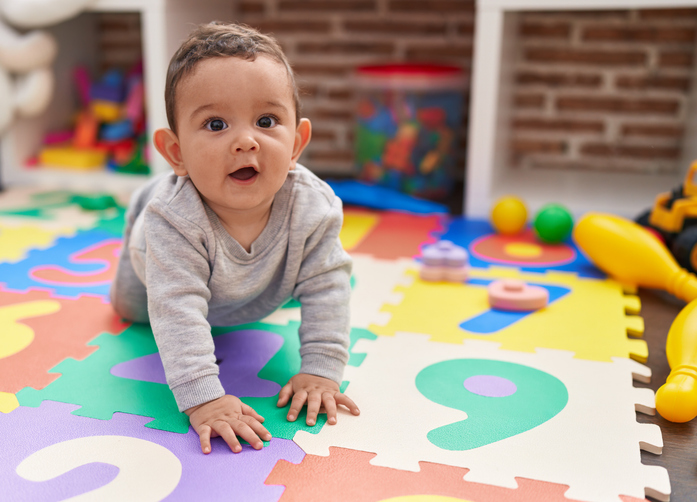
- Rolling — most babies can roll front to back and back to front by 6 months
- Sitting — babies begin to sit with support and may briefly sit independently
- Bearing weight on legs — when held upright, babies bounce and push down
- Reaching and grabbing — improved hand-eye coordination allows intentional grasping
- Bringing objects to mouth — everything goes in; this is developmental, not just ‘bad behavior’
Social and Communication Development
- Babbling — consonant-vowel combinations (“ba-ba,” “da-da”) emerge
- Responding to name — babies begin to turn toward their own name
- Recognizing familiar faces and voices with delight
- Stranger anxiety begins to develop — clinging to parents around unfamiliar adults is normal
- Expressing emotions clearly — joy, frustration, and displeasure through facial expressions and sounds
Starting Solid Foods
Around 6 months, most babies show readiness for solid foods: they can hold their head steady, sit with minimal support, show interest in food, and have lost the tongue-thrust reflex. Single-grain cereals, pureed vegetables, and soft fruits are typical first foods. Early allergen introduction (peanuts, eggs) is now recommended for most babies — ask your provider.
What to Watch For
Contact your provider if your 6-month-old isn’t babbling, isn’t rolling in either direction, shows no interest in surrounding people or objects, or doesn’t reach for things. These may warrant a developmental evaluation.
The 6-month well-child visit is the perfect time to discuss development. Schedule at nvpeds.com or call (702) 457-5437.