I Think My Child Has Allergies. What Steps Should I Take?
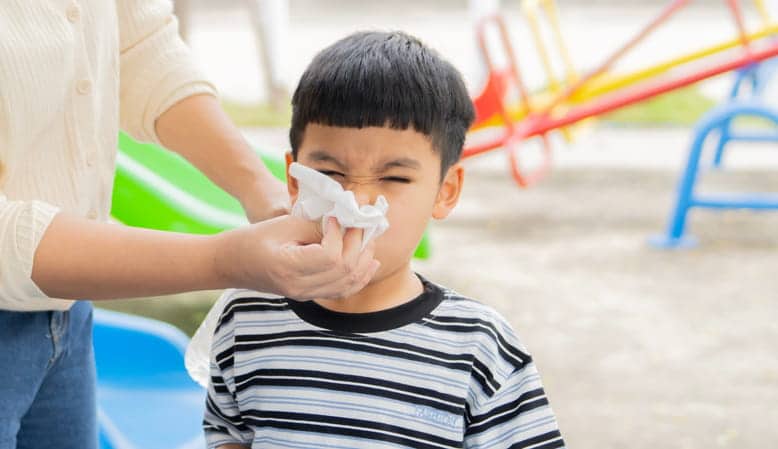
Runny nose that lasts for months. Itchy, watery eyes every spring. Chronic cough that doesn’t respond to cold medicine. If this sounds familiar, your child may have allergic rhinitis (hay fever) or another allergic condition. Here’s how to proceed.
Step 1: Track the Symptoms
Before your pediatric appointment, spend a week noting: when symptoms occur, how long they last, what seems to trigger them, whether they’re seasonal or year-round, whether indoor or outdoor environments make a difference, and whether there are pets or other allergen exposures at home.
This information helps your provider distinguish between allergic rhinitis, perennial rhinitis, other causes of nasal symptoms, or a different condition entirely.
Step 2: See Your Pediatrician
Your pediatrician is the right first step — not an allergist. Many childhood allergic conditions can be diagnosed clinically and managed with first-line treatments (antihistamines, nasal corticosteroid sprays) without formal allergy testing. Your provider will assess the symptom pattern and determine whether further workup is needed.
Step 3: Consider Allergy Testing If Indicated
If your child has severe or poorly controlled symptoms, asthma alongside suspected allergies, or a possible food allergy, your provider may refer to a pediatric allergist for skin prick testing or blood testing (specific IgE). Testing helps identify specific triggers so management can be targeted.
Practical Management Tips
- Reduce indoor allergen exposure — allergen-proof covers on mattresses and pillows, regular vacuuming with a HEPA filter, keeping pets out of bedrooms
- Monitor local pollen counts and limit high-count day outdoor exposure
- Use prescribed nasal corticosteroid sprays consistently — they work best when used daily, not just on symptom days
- Understand that allergic conditions and asthma are closely linked — if your child has both, managing allergies helps control asthma
Start with a well-child visit or sick visit to discuss your child’s symptoms. Call (702) 457-5437 or contact us online.